Supermarine Spitfire

Britain’s Most Enduring Aviation Icon
Introduction
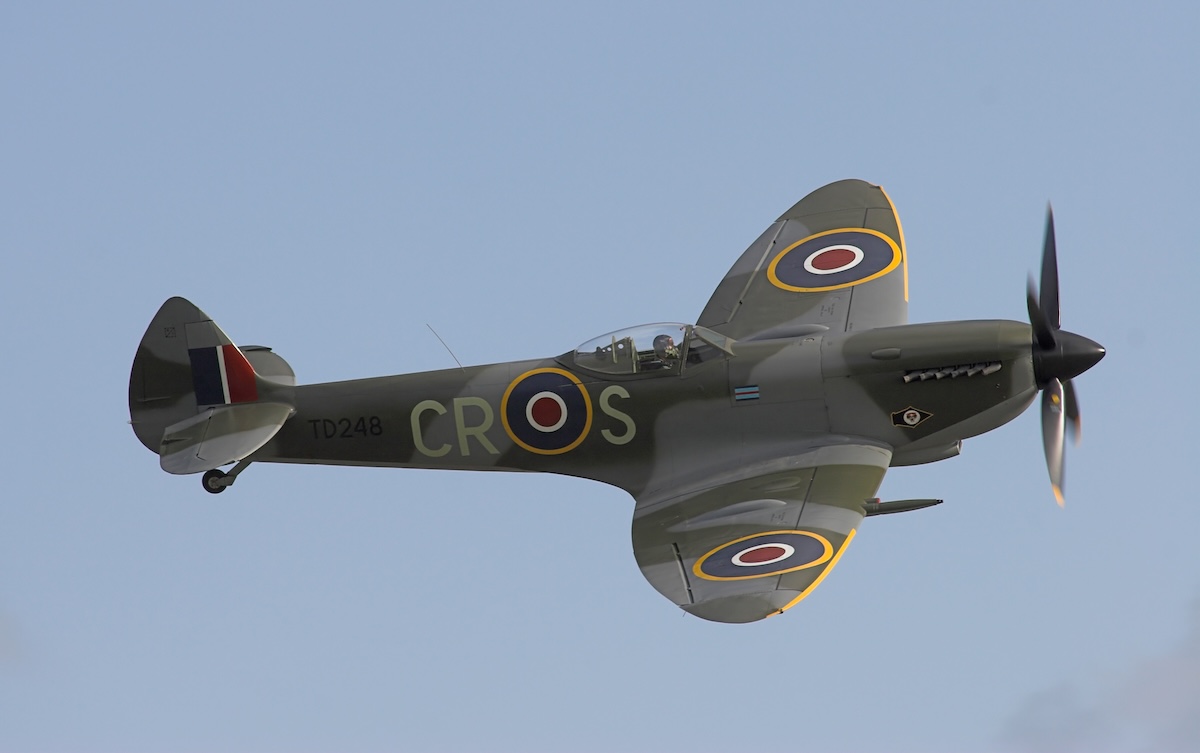
Few aircraft are as instantly recognizable—or as emotionally resonant—as the Supermarine Spitfire. With its elegant elliptical wings and unmistakable Merlin engine note, the Spitfire has become a lasting symbol of British resilience, engineering excellence, and the human drama of aerial combat. Even decades after its first flight, the Spitfire remains one of the most celebrated and closely followed vintage aircraft in the world.
Origins and Design
The Spitfire was designed in the mid-1930s by Reginald J. Mitchell at Supermarine, at a time when aviation was rapidly transitioning from biplanes to sleek, high-performance monoplanes. Its most distinctive feature—the elliptical wing—was not a stylistic choice, but an aerodynamic one. The shape reduced drag and allowed for higher speeds and better climb performance than many contemporaries.
Equally important was the aircraft’s construction. The Spitfire used advanced stressed-skin aluminum techniques that allowed it to remain relatively lightweight while handling increasingly powerful engines and heavier armament as the war progressed.
Role in World War II
The Spitfire is most closely associated with the Battle of Britain in 1940, where it fought alongside the Hawker Hurricane against the German Luftwaffe. While the Hurricane accounted for more enemy aircraft numerically, the Spitfire’s speed and agility made it particularly effective against German fighters like the Messerschmitt Bf 109.
As the war continued, the Spitfire evolved continuously. New engine variants, wing designs, and armament configurations allowed it to remain competitive well into the later stages of the conflict. Few fighters of the era can claim such a long and adaptable frontline service life.
Variants and Evolution
One of the reasons the Spitfire fascinates enthusiasts is the sheer number of variants produced. Over 20 major marks were built, ranging from early Merlin-powered interceptors to later Griffon-powered versions with dramatically increased horsepower.
Key developments included:
- Increased armament, moving from rifle-caliber machine guns to cannons
- Structural strengthening to support higher speeds and dive limits
- Specialized versions for reconnaissance, high-altitude interception, and carrier operations
This constant refinement makes the Spitfire a favorite subject for historians, modelers, and restorers alike.
The Spitfire Today
As of 2026, the Spitfire remains one of the most actively flown WWII aircraft types. Dozens of airworthy examples exist worldwide, supported by a robust restoration and maintenance community. Seeing a Spitfire fly—particularly in formation with other warbirds—is widely regarded as one of the most moving experiences at any airshow.
Its continued presence is not accidental. Owners, museums, and preservation groups invest extraordinary effort into keeping these aircraft operational, ensuring that the sound, sight, and story of the Spitfire remain accessible to future generations.
Why Enthusiasts Still Care
The Spitfire occupies a unique space where engineering achievement, historical significance, and emotional impact intersect. It represents:
- A turning point in fighter design
- A national symbol during a moment of existential threat
- A living artifact that still flies, sounds, and feels authentic
For many aviation enthusiasts, the Spitfire is not just an aircraft—it is the benchmark by which other warbirds are measured.
Legacy
More than eight decades after its introduction, the Spitfire endures as one of the most successful and beloved aircraft in aviation history. Its legacy is preserved not only in museums and books, but in the skies over airshows and commemorative flyovers, where it continues to do what it was designed to do: fly beautifully.
What Do You Think?
Have you seen a Supermarine Spitfire in person—taxiing past on a flight line, hanging in a museum, or flying overhead at an airshow?
For many enthusiasts, the Spitfire leaves a lasting impression that goes beyond its history. Some point to the sound of the Merlin engine, others to the shape of the wings or the way it seems to move through the air with purpose and grace. Often, it’s not one single detail, but the feeling that comes with seeing a piece of living history still doing what it was built to do.
VintageAviation.org welcomes reflections from fellow aviation enthusiasts. If you have a memory, observation, or perspective on the Spitfire—what stood out to you, or why it continues to matter—we invite you to share it. Selected reflections may be included in future updates to this article.